Choosing a wall protection manufacturer in China requires more than comparing product prices and reviewing a product catalog. For distributors, contractors, architects, and healthcare project buyers, the right supplier should demonstrate consistent manufacturing capabilities, reliable material quality, product testing, and the ability to support projects from specification to delivery.
A reliable wall protection manufacturer should be able to provide five things: verifiable factory information, detailed material specifications, documented quality control, relevant product experience, and clear communication throughout the order process. If a supplier cannot provide these basic details, buyers should investigate further before placing an order.
This guide explains how to vet a wall protection manufacturer in China, what documents and product samples to request, which warning signs to watch for, and how to evaluate a supplier for long-term cooperation.
Wall protection products are installed in environments where durability, hygiene, safety, and appearance all matter. Hospitals, nursing homes, schools, airports, hotels, and commercial buildings often experience constant contact from wheelchairs, medical carts, luggage, furniture, and other equipment.
A low-cost product may look similar to a higher-quality alternative, but differences in material composition, impact resistance, surface treatment, aluminum retainers, and installation accessories can affect its performance over time.
Working with an experienced manufacturer helps buyers reduce several common procurement risks:
For international buyers, it is particularly important to distinguish between a genuine manufacturer, a trading company, and a supplier that outsources most of its production. Each business model can have a place in the supply chain, but buyers should understand exactly who controls product quality and production schedules.
The first step is to verify the company's identity and manufacturing capabilities. A professional website and a large product catalog are not enough to establish that a company operates its own production facilities.
Ask the supplier for its registered company name, factory address, business license, production overview, and a description of which manufacturing processes are handled in-house.
For a wall protection manufacturer, useful areas to investigate include:
A video factory tour is a useful starting point, but it should not replace a proper audit for large or long-term orders. Buyers can also arrange a third-party factory inspection to verify production conditions and manufacturing capabilities.
For example, Pinger Panel's company introduction identifies its business as an integrated operation covering design, development, production, and sales. The company was founded in 1999 and specializes in antibacterial vinyl wall sheets and wall protection systems.

These details provide a starting point for supplier evaluation. Buyers should still request project-specific production information and supporting documents before confirming an order.
Material quality is one of the most important factors when choosing a wall protection supplier. Products with similar appearances may have different internal structures, material formulations, thicknesses, and performance characteristics.
Do not rely on general descriptions such as premium quality, heavy duty, or antibacterial. Ask for measurable specifications that can be checked against the actual product sample.
For vinyl wall protection panels, buyers should review:
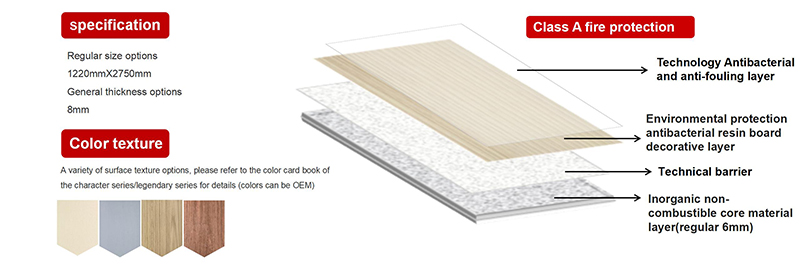
For instance, Pinger's Clean Room Wall Protection product page lists sheet thickness options from 1mm to 3mm, with standard sheet dimensions including 1.22m × 2.44m and 1.22m × 2.8m for solid colors. The product page also specifies PVC-Free, BPA-Free, PBT-Free, and Phthalate/DEHP-Free material characteristics.
These are useful specification details for procurement teams to review, but buyers should request the applicable technical data sheets and supporting test reports to confirm that the selected product meets their project requirements.
For healthcare and cleanroom projects, material selection should also consider cleaning frequency, hygiene requirements, chemical exposure, and the applicable local building regulations.
Explore Pinger's Clean Room Wall Protection panels to review the available material options, sheet dimensions, thicknesses, and product information.
A product sample is one of the most practical ways to evaluate a wall protection manufacturer. Photographs and specification sheets cannot fully demonstrate the actual surface finish, material rigidity, color appearance, edge quality, or assembly details.
Before approving a supplier, request representative samples of the products you intend to purchase. If the project involves several product categories, evaluate each category separately rather than relying on a single sample.
A useful sample inspection should cover the following points:
It is also important to approve a production sample before mass production. Keep an approved reference sample and record the relevant product model, color, thickness, and specifications. This makes it easier to identify differences during final inspection.
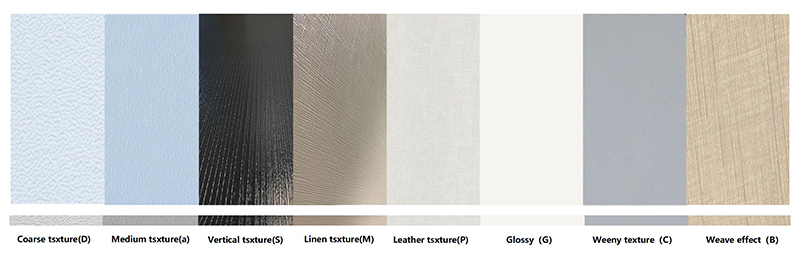
For projects involving multiple colors or wood-grain finishes, request physical color samples rather than approving colors from screen images alone.
Reliable wall protection manufacturers should be able to explain how product quality is evaluated and provide relevant supporting documents. However, buyers should distinguish between a manufacturer's own product description, an internal test result, and a report issued by an independent testing laboratory.
Depending on the product and application, request documentation covering:
Always check whether the report identifies the same product model, material formulation, thickness, and manufacturing location as the product being purchased. A report for a different material or product series does not automatically prove the performance of the selected item.
For example, Pinger's WG1021 wall guard product information describes a construction consisting of a 2mm vinyl cover and a 2mm aluminum retainer. Its product page also references antibacterial and fungal resistance performance. Buyers evaluating these claims should request the corresponding reports and verify their scope and testing conditions.
See the WG1021 Wall Guard System for its published construction details and product specifications.
A useful rule is simple: if a supplier claims that a product is fire-rated, antibacterial, or environmentally friendly, ask for evidence that relates to the actual product rather than accepting a general marketing statement.
Many commercial projects require more than one type of wall protection product. A hospital corridor, for example, may need wall panels, crash rails, corner guards, handrails, wall base systems, and door protection.
Working with a manufacturer that can coordinate multiple product categories may simplify procurement, reduce compatibility issues, and make it easier to maintain a consistent finish throughout the project.
When evaluating a supplier, check whether its product range includes:
For example, Pinger offers dedicated Wall Guard Systems for impact protection, alongside wall panels and other protection products. Its WG1021 model uses a vinyl cover and aluminum retainer, with a standard length of 5m and a width of 102mm.
For vulnerable external corners, buyers should also compare different corner guard materials, wing sizes, and mounting methods. Stainless steel and vinyl corner guards may serve different design and durability requirements.
Review the available Wall Corner Guard options when preparing a coordinated protection specification.
For distributors, contractors, and private-label buyers, customization can be an important part of the supplier selection process. A manufacturer should be able to explain which product features can be customized and what limitations apply.
Common customization requirements for wall protection products include:
Ask the supplier whether customization affects minimum order quantities, tooling costs, sample lead times, and mass production schedules. These details should be confirmed before signing the purchase agreement.
It is also worth checking whether the manufacturer can provide drawings, installation guidance, technical data, and product recommendations based on the project layout.
A capable supplier should not simply accept every specification without review. It should identify potential installation or material compatibility problems before production begins.
Exporting wall protection products involves more than manufacturing. International buyers also need accurate documentation, suitable packaging, clear shipping arrangements, and communication across different time zones.
Ask potential suppliers about their experience with overseas customers and the types of projects they have supplied. Relevant experience may include healthcare facilities, educational buildings, airports, hotels, senior living facilities, and commercial interiors.
Important questions include:
Project references should be checked carefully. Ask whether the supplier manufactured the products directly, what product categories were supplied, and whether the project is relevant to your intended application.
According to its company introduction, Pinger reports that its products have been exported to more than 100 countries and regions. This international experience is a useful starting point for buyers evaluating its export background, while specific market references and project documentation should still be reviewed during procurement.
Price is important, but the lowest quotation is not always the most economical option. Two wall protection products may have different thicknesses, materials, aluminum components, accessories, packaging standards, or performance levels.
Before comparing quotations, make sure all suppliers are pricing the same product specification.
Use the following cost factors when reviewing offers:
For example, a quotation for a vinyl wall guard should clearly identify its vinyl cover thickness, aluminum retainer thickness, overall dimensions, end caps, mounting accessories, and standard length.
Ask each supplier to provide a detailed quotation rather than a single price per unit. This makes it easier to identify missing components and avoid unexpected costs after the purchase order is confirmed.
Not every supplier that claims to be a wall protection manufacturer has the experience, technical knowledge, or quality control systems required for international projects.
The following warning signs deserve closer attention:
One warning sign alone does not necessarily mean that a supplier is unreliable. However, several unresolved issues should be treated as a reason to pause the order and conduct further checks.
Before selecting a supplier, procurement teams can use the following checklist to organize their evaluation.
| Evaluation Area | What to Verify | Evidence to Request |
|---|---|---|
| Company background | Registered business and operating history | Business license and company profile |
| Factory capability | Production equipment and manufacturing processes | Factory tour, production videos, audit report |
| Material quality | Material composition, thickness, and finish | Technical data sheets and physical samples |
| Product performance | Fire, antibacterial, impact, and chemical performance where applicable | Relevant laboratory test reports |
| Quality control | Incoming, in-process, and final inspection | Inspection procedures and quality records |
| Product range | Panels, guards, rails, trims, and accessories | Product catalog and technical specifications |
| Customization | Custom sizes, colors, and finishes | Custom sample and written quotation |
| Export experience | Overseas project and shipping experience | Project references and export documentation |
| Commercial terms | Pricing, lead time, payment, and warranty | Detailed quotation and purchase agreement |
| After-sales service | Complaint handling and replacement procedures | Written service and quality terms |
A simple internal rating system can make supplier comparisons more objective. For example, assign each of the 10 evaluation areas a score from 1 to 5, where 1 means insufficient evidence and 5 means fully verified.
The maximum score is 50 points. A higher score indicates stronger documented evidence, but it should not replace mandatory compliance checks, sample approval, or factory verification. Any unresolved safety or regulatory issue should be treated separately rather than offset by a high overall score.
For buyers sourcing wall protection systems for healthcare, commercial, educational, and public spaces, Pinger Panel offers a product range that covers several common project requirements.
Guangzhou Pinger Vinyl Material Co., Ltd. was founded in 1999. Its business covers design, development, production, and sales, with a focus on antibacterial vinyl wall sheets and anti-collision protection systems.
Its published company information also highlights more than 10 invention and utility model patents, as well as exports to more than 100 countries and regions.
Its product portfolio includes:
For procurement teams, having access to multiple coordinated product categories can make it easier to develop a consistent wall protection specification across different areas of a building.
Rather than choosing products based on catalog images alone, buyers can review the technical information, request samples, confirm the required material specifications, and discuss the installation conditions with the supplier.
Explore the Pinger Panel product range to compare available wall panels, handrails, corner guards, wall guards, and related protection systems.
If you are planning a hospital, senior living, school, hotel, or commercial interior project, contact Pinger Panel to discuss your application requirements, product specifications, and customization needs.
Start by checking the company's registered business information, factory address, production equipment, and manufacturing processes. Request a live video factory tour or arrange an independent inspection. Also confirm which products and production stages are handled in-house and which are outsourced.
Request a business license, company profile, product technical data sheets, material specifications, relevant laboratory test reports, quality management documentation where applicable, and a detailed quotation. For large orders, also request inspection records and written quality acceptance criteria.
The correct thickness depends on the product construction, installation environment, and required performance. Pinger's Clean Room Wall Protection product information lists thickness options from 1mm to 3mm. Buyers should compare actual material properties and application requirements rather than choosing thickness alone.
There is no universal sample quantity. As a practical starting point, request at least one representative sample for each distinct product model, material, or finish that requires approval. For large projects, request additional samples when different production batches or customized colors are involved.
The most common warning signs include unverifiable factory information, vague material specifications, unsupported performance claims, inconsistent samples, unusually low quotations, missing technical documents, and unclear after-sales responsibilities.
Yes. Some specialized wall protection manufacturers offer integrated product ranges covering wall panels, wall guards, corner guards, handrails, crash rails, and related accessories. Buyers should confirm that each category meets the project's technical and installation requirements.
Compare material type, thickness, dimensions, surface finish, aluminum components, accessories, customization costs, packaging, lead time, delivery terms, and quality requirements. Make sure all suppliers are quoting against the same specifications before comparing unit prices.
According to its company introduction, Guangzhou Pinger Vinyl Material Co., Ltd. was founded in 1999. The company focuses on antibacterial vinyl wall sheets and wall protection systems, with products supplied to more than 100 countries and regions according to its published company information.


 IPv6 network supported
 English
 français
 Deutsch
 русский
 italiano
 español
 português
 العربية
 한국의
 Tiếng việt
 Indonesia
 中文